- L’Autre Chemin
- Discovering Haute-Loire
Haute-Loire – A Land of Harmonies and Contrasts
The landscapes are magnificent, unspoiled, cultivated, and inhabited. As you travel through the high plateaus of Mézenc, you are struck by the feeling of being at the end of the world, of unspoiled nature. Open spaces as far as the eye can see, meadows where cows graze wild grass, and houses with sturdy stone walls typical of the region reveal harsh winters and a warm, authentic hospitality. Of course, the Mézenc region is captivating, both accessible and rugged, offering incredible panoramic views of the department, as well as the Ardèche, the Rhône Valley, and on clear days, incredible views of the Alps and Mont Blanc. While the Loire’s sources are in Ardèche and its first waters meander through the Ardèche, the Loire then flows through the department in wild gorges, offering stunning natural landscapes in Lafarre, Arlempdes, and Goudet. The river, which has the character of a river, then joins Brives-Charensac to calm its waters and greet the castle of Lavoûte-sur-Loire before flowing towards the Loire department and later joining other large castles.


The Haute-Loire is home to many other rivers, some more tumultuous than others, such as the magnificent Lignon River, which winds between the Plateaux du Mézenc and Meygal and flows peacefully beneath Fay-sur-Lignon or Chambon-sur-Lignon. Other rivers are just waiting to be discovered, such as the Gazeille, visible at Monastier-sur-Gazeille, but also the Allier, which flows beautifully through the magnificent gorges and offers wonderful landscapes. It enters the department after Langogne in Lozère to join villages such as Chapeauroux, Pont d’Alleyras, Monistrol d’Allier, but also Langeac and Lavoûte-Chilhac, the department’s third largest town and sub-prefecture. The Allier magnifies the village of Lavoûte-Chilhac with one of its most beautiful meanders.
The Haute-Loire is full of small rivers (700 streams) to discover to cool off or fish and some magical places where the rivers become waterfalls like in Agizoux with the Beaume waterfall or in Estreys. If you still want water, one of the rather unreal places in Haute-Loire is of course the Lac du Bouchet, a volcanic lake located in the commune of Bouchet-Saint-Nicolas and surrounded by a superb forest. We can also mention the Lac Bleu de Champclause, the Lac de St-Front and the Lac de Malaguet near Allègre.

A Volcanic Department
A face made of bumps and hollows, the Haute-Loire is considered a mountainous department, with two-thirds of its territory above 800 meters. Discover the high plateaus of Mézenc, but also the peaks of Meygal and the Devès mountains. Haute-Loire is one of those regions where nature is playful, with sequences of plains, gorges, and mountains. This variety is marked by the volcanic nature of the department, which makes the relief and geology unique. An example is the basalt columns, which are the result of thermal contraction following an eruption. It is therefore not surprising to find this type of landscape in the Haute-Loire, but also in Iceland and on the Île des Saintes in Guadeloupe.

Heritage
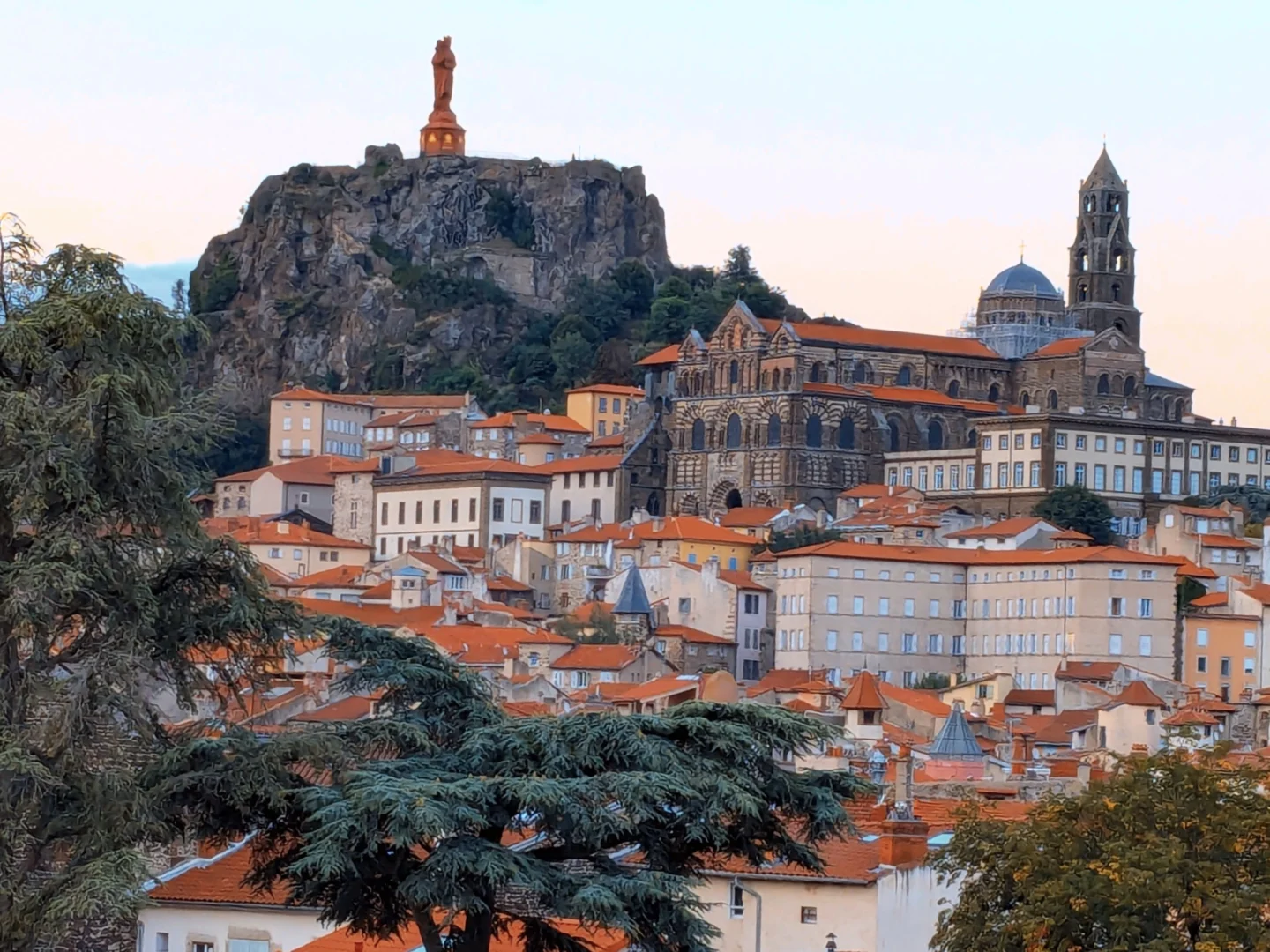
Haute-Loire also offers a wealth of heritage. To appreciate this, just take a stroll through the town of Puy-en-Velay, where its “upper town” invites you to step back in time. It is also to celebrate this wealth that the Roi de l’Oiseau Renaissance Festival is organized every year in September.
Stroll through the cobbled streets of the town of Puy-en-Velay and discover statues, gargoyles, ornaments, etc. at every street corner. The old town is a protected area in order to preserve the architectural heritage and the atmosphere that reigns in its small streets. There you will discover private mansions, the cathedral – starting point of the Via Podiensis of the Way of St. James. Discover the Corneille rock with the imposing statue of Notre-Dame-de-France, the Aiguilhe rock topped by the incredible St. Michel chapel, the Hôtel-Dieu, the Place du Plot with its Mediterranean feel.
In Le Puy-en-Velay, you will discover a living and intact heritage, a town proud of its history, its heritage but firmly anchored in the present thanks to its inhabitants who perpetuate traditions and who bring to life products that have made the reputation of the town of Le Puy-en-Velay. We can mention the Pagès company which perpetuates the link between Le Puy-en-Velay and Verveine du Velay (a green liqueur), but also in infusion, the Sabarot company which sublimates the green lentil of Velay, but also lace with the bobbin lace teaching center…
An endearing territory
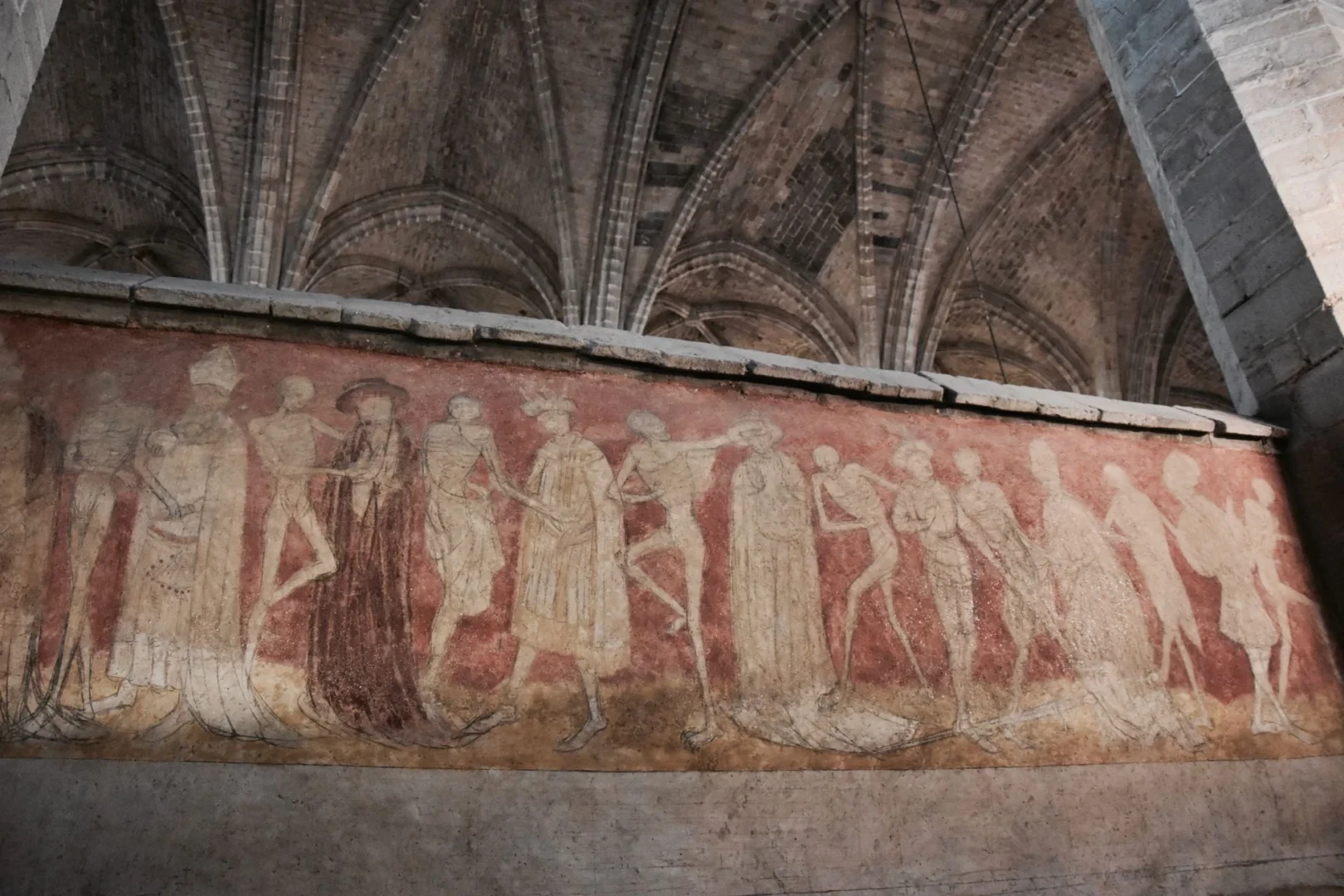
Other towns will allow you to discover the riches of the Haute-Loire, notably La Chaise-Dieu, its Abbey but also known thanks to its music festival, Monastier-sur-Gazeille its Benedictine abbey, its castle. Monastier-sur-Gazeille was also “celebrated” by the Scottish writer Robert-Louis-Stevenson… Other towns invite you to discover: Brioude, Sub-Prefecture offering magnificent monuments like the Basilica of St-Julien, but also the House of Salmon and the River as well as the Hotel of Lace.

Land of travel
Haute-Loire is a land of travel, notably the starting point of the Via Podiensis of the Way of St. James of Compostela, of which Le Puy-en-Velay is the European capital and offers one of the most beautiful departure points for this pilgrimage. But Haute-Loire was also celebrated by Robert-Louis-Stevenson, a Scottish writer who wrote the story of his Journey with a Donkey in the Cevennes.
Le Puy-en-Velay offers the most beautiful setting for the first steps towards Compostela: the Cathedral. The pilgrim begins his journey at the top of the steps of the monument and glimpses on the horizon the adventures that the Way has in store for him. Le Monastier-sur-Gazeille, starting point of the Stevenson Way where you will find in the center of the village a stele bearing the effigy of the writer recalling his passage and his departure in 1878 with his donkey Modestine.
Gastronomy in Haute-Loire
A department where land, nature, and gastronomy are intimately linked. The Velay green lentil, a legume that has been awarded the AOP (Protected Designation of Origin) label. A seed, a vegetable with very rich nutritional properties, it has been compared to a vegetable steak. Today, you’ll find this legume on the finest tables of Haute-Loire. Le fin gras du Mézenc, a new AOP (Protected Designation of Origin) label for this marbled beef, that is, studded with intramuscular fat dots. The meat comes from steers (minimum 30 months old) or heifers (minimum 24 months old) raised on hay and grass in the Mézenc region and fattened during the last winter with locally produced natural mountain hay containing cistre (or mountain fennel). This last characteristic, along with its seasonality (from February to June), gives the product its typicality.
Brown or rainbow trout, which you can catch wild in the many rivers of Haute-Loire or in the fish farms of Lignon, Vourzac, or Moulin des Merles, which also supply restaurants in Haute-Loire. Verbena du Velay, a local liqueur made from a blend of verbena and other plants, some of which remain the secret of the cellar masters. The plants macerate in alcohol for 8 to 9 months before being distilled in a still. Black Velay sheep’s milk, which has “always” come (already raised by the Celts) from the volcanic plateaus of Velay. Velay cheese, a cow’s milk cheese with a rind populated by artisans (artisans or artisaus) who carve the rind, giving it a rustic appearance. It can be found at the magnificent and renowned market on Place du Plot every Saturday morning. Mountain charcuterie: sausages, black puddings, sausages, and hams of all kinds… Vellavia beer, a beer produced from barley from the Po Valley. A subtle beer with an alcohol content of 5.2% (Alcohol abuse is dangerous for your health)
Know-How Haute-Loire is also known for some of its iconic skills. Puy lace is an ancestral technique that was taught by the Béates, learned women from the villages of Haute-Loire who provided general education. You can still find many Béates houses throughout the department today.